


Join our world of travel
Receive handpicked inspiration, insider tips and exclusive updates from Emma, Deborah and the Essential Escapes team.

As you might imagine choosing between Arctic vs Antarctic expeditions requires much more scrutiny than your average holiday. Without expert guidance, you might imagine the planet’s two poles to be relatively similar: white, immense, breathtaking, and abundant in wildlife. But dig deeper, and the Arctic and Antarctic are poles apart in more ways than their geography.
Together with our partners at Quark Expeditions, a team that compromises some of the most experienced polar experts on earth, we have created your exclusive travel guide on choosing between Arctic vs. Antarctic expeditions. From the variables in wildlife to geography, culture and experiences, discover the differences between our planet’s poles, written in partnership with those who have conducted more than 200 expeditions over a 20-year career.
Helping you take a step closer to the ultimate, one-off adventure to the places not many footsteps have trodden. Places mostly untouched, raw and wild – two of the last great wildernesses of our planet.

It goes without saying that both of Earth’s Poles are incredibly vast, and so each is explored in pockets carefully chosen by our expert partners. The Arctic is an ocean covered by a thin layer of sea ice and surrounded by land. Conversely, Antarctica is a continent, covered by a very thick ice cap and surrounded by sea ice and the Southern Ocean.
The rugged, remote Arctic remains one of the most unexplored domains on the planet. This ice-laden region encompasses the Canadian High Arctic; Greenland; the Norwegian archipelago of Svalbard, which includes Spitsbergen; Russia; and at the very top of the planet, of course, the North Pole – all destinations offered by Quark Expeditions.
Take the Canadian High Arctic for instance. Canada has more land mass in the Arctic region than any other country – but relatively little population base. There are more than 35,563 islands in the remote Canadian Arctic Archipelago, of which Baffin Island, the fifth-largest island in the world, is just one. Whilst in Greenland the coastline is dominated by icebergs, glaciers, deep fjords, mountains and vast stretches of wilderness. Greenland’s traditional Inuit communities (descendants of the Thule people) appeal to travellers with a passion for ancient cultures. And of course, there’s the Aurora Borealis, commonly known as the Northern Lights.
The chance to stand at the very top of the world lures the most intrepid travellers to the North Pole, which is often called “terra incognita,” the unknown land. No one lives in this constantly shifting ice domain in the middle of the Arctic Ocean at 90° North. The closest permanently inhabited settlement is Alert, Nunavut, about 800 kilometres (508 miles) away.
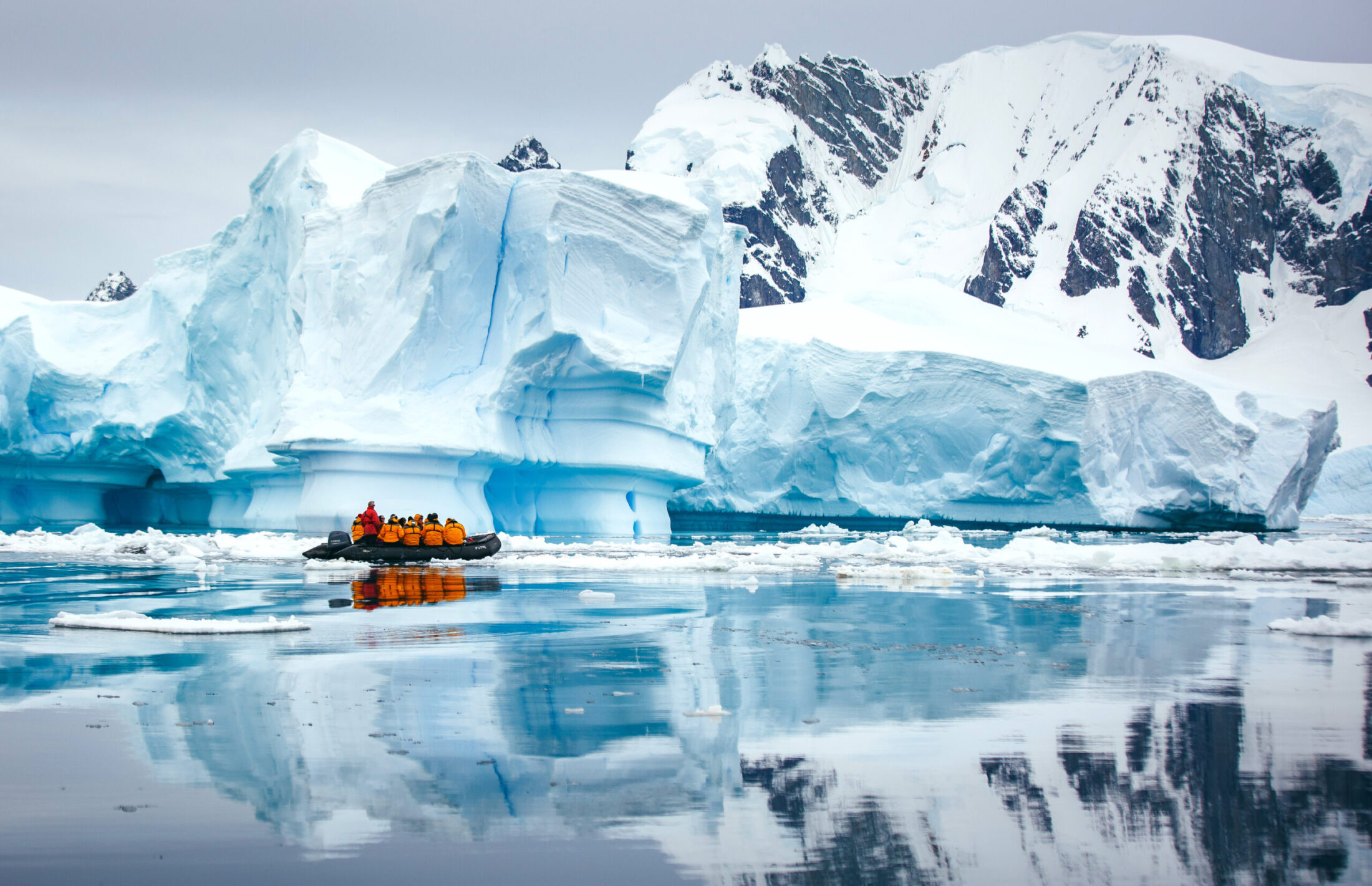

Meanwhile, 180° south in Antarctica you’ll find a sometimes-unforgiving continent marked by harsh temperatures and rugged terrain, home to a rich diversity of wildlife that inhabits the glaciers, mountains, bays, fjords, inlets, pebble beaches and rugged coastlines of this part of the planet. Our partners at Quark Expeditions have been leading travellers into some of the most spectacular and remote parts of the Antarctic for more than three decades.
The Antarctic Peninsula, for instance, is an 800-mile (1,300 km) stretch of land and ice extending northward from the Antarctic continent towards South America. First-time visitors are typically overwhelmed by the staggering beauty of the Antarctic Peninsula: glaciers, snow-covered mountain tops, deep blue waters and icebergs of every conceivable shape and size.
Patagonia meanwhile is a sparsely populated, wildlife-rich region in the southern part of South America. The Andes Mountains form the natural divide between Argentine Patagonia and Chilean Patagonia, where our partners at Quark Expeditions focus their explorations. This western part of Patagonia that lies in Chile is known for its glaciers, fjords, mountains, channels, waterfalls, lakes, verdant forests and abundant wildlife. Torres del Paine National Park, the Tierra del Fuego archipelago, Cape Horn and the Diego Ramirez Islands are popular destinations for visitors to Patagonia.
Then there’s the South Georgia and the Falkland Islands to consider as you weigh up the Arctic vs. Antarctic expeditions. South Georgia is 1,300 km (800 miles) southeast of the Falkland Islands and has a handful of temporary human inhabitants. The crescent-shaped, mountainous island is often called the “Galapagos of the Poles” because of its biodiversity. Whilst the sub-Antarctic archipelago of the Falkland Islands, or Islas Malvinas, is known for its wildlife—penguins and bird species are plentiful—as is its dramatic history.

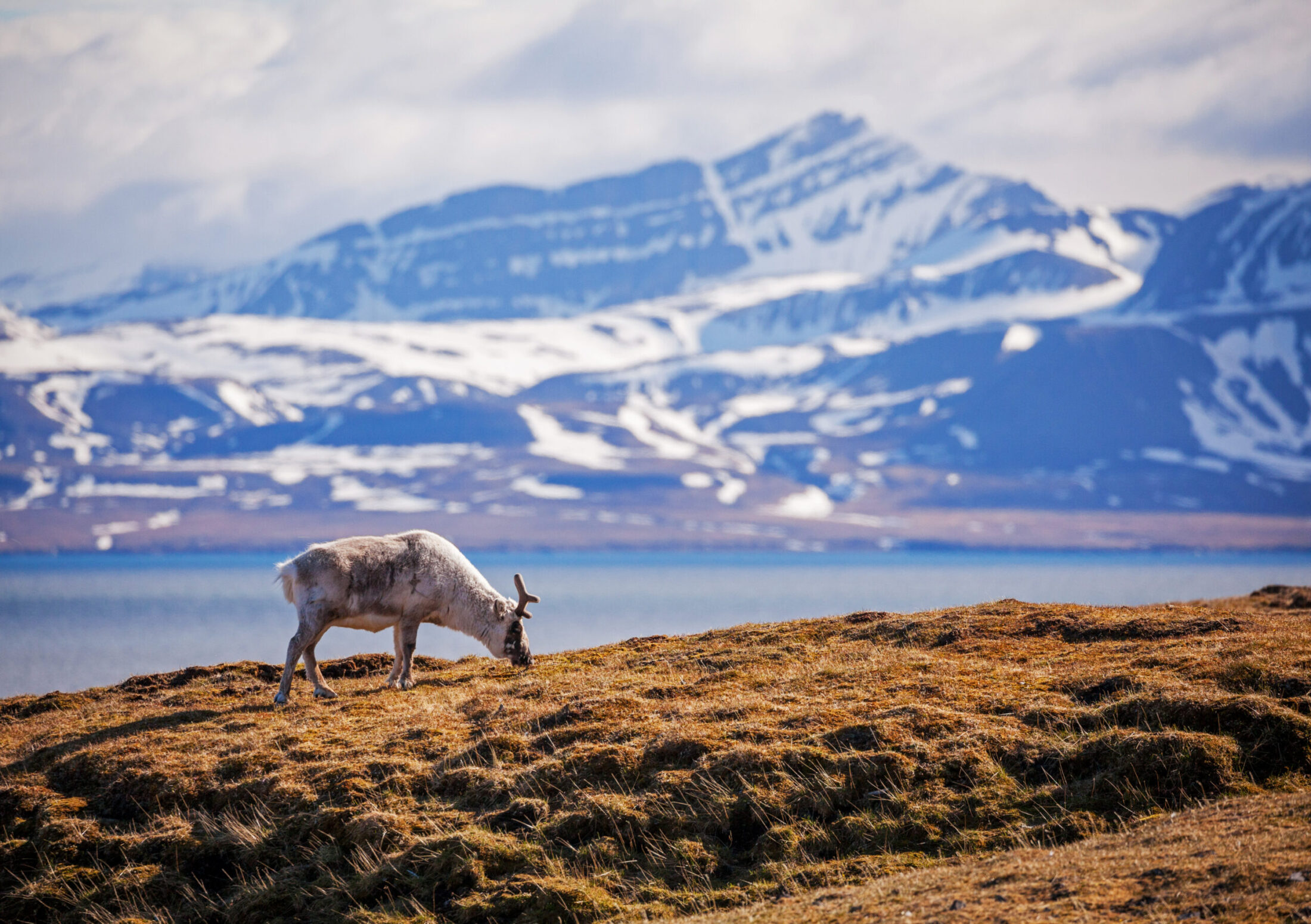
Deciding between Arctic vs. Antarctic expeditions for your once-in-a-lifetime adventure also hinges on what you want to see as far as wildlife is concerned. Native species differ significantly at the opposing ends of our planet, head to the Antarctic in search of polar bears for instance and you’ll be royally disappointed.
First to the Antarctic: icebergs, glaciers, snow-covered mountain tops and incredible wildlife. People who dream of visiting the 7th Continent typically start on the peninsula, which is ice-covered and mountainous. Here you’ll witness minke and humpback whales at close range as you navigate around icebergs of every conceivable shape and size in the bays, fjords and inlets.
At Neko Harbour, which got its name from the Neko whaling ship and floating factory that operated here from 1911 to 1924, Gentoo penguins breed on the cobblestone beach, which is also a popular haul-out location for Weddell seals and fur seals. Whilst at Marguerite Bay expect ice-covered mountains, historic research stations, and an Emperor penguin colony at the Dion Islands on the northern end of the bay.
In Patagonia, the Cape Horn Biosphere Reserve is home to thousands of tiny plants, mosses and lichens that form “the miniature forests of Cape Horn.” Three of the world’s largest bodies of water—the Atlantic, Pacific and Southern Oceans—collide at Cape Horn, making for gale-force winds.
Bird species populations are here impressive too with an estimated 1.35 million pairs of blue petrels, 99,000 pairs of diving petrels, and 55,000 pairs of black-browed albatross. There are also grey-headed albatross and shy albatross. The ocean waters adjacent to Tierra del Fuego are home to southern right whales, humpbacks, blue whales and southern minkes. Dolphins, sea lions and seals (fur, leopard and southern elephant) are also commonly observed here.

Up in the far North of the planet, the wildlife is staggeringly different. The Arctic is one of the few places on earth where you can experience an abundance of wildlife in its natural habitat, including polar bears, walrus, reindeer, Arctic foxes, beluga whales and numerous species of seabirds.
Canada’s High Arctic territory is bounded on the east by the Beaufort Sea, on the northwest by the Arctic Ocean, and on the east by Greenland, Baffin Bay and Davis Strait. Its southern boundary is the Hudson Bay and mainland of Canada. This translates into endless mountains, glaciers, tundra, remote rocky shorelines, towering granite cliffs, and unending bodies of water to explore. The wildlife viewing is astounding as you spot polar bears, grizzly bears, muskoxen, beluga whales, harp seals, walruses, and migratory birds, among other species.
In West Greenland, wildlife sightings can include migratory seals such as harp, ringed, hooded and bearded seals, as well as humpback and bowhead whales, while in Northeast Greenland it’s possible to see grazing muskoxen. The lure for many visitors is, of course, the Aurora borealis, also known as the Northern Lights, the phenomenal explosion of green, purple and red lights dancing across the night sky.
But perhaps the Wildlife Capital of the Arctic is Spitsbergen, the largest island in the Norwegian archipelago of Svalbard, which also includes the three smaller islands of Nordaustlandet, Barentsøya and Edgeøya. Spitsbergen is about 1,300 kilometres from the North Pole and is dark four months of the year, but when the sun returns in April, the days lengthen until sometime in June when the sun never sets—all the better for viewing the wildlife that has made Spitsbergen so popular with travellers on a quest to observe polar bears and other wildlife, such as walruses, reindeers, arctic foxes, beluga whales, seals and seabirds.


The best time to see polar bears on Spitsbergen is May to August. The ice melts sufficiently for ships to navigate the still-icy waters during this period. Polar bear sightings are common as the majestic creatures follow the pack ice on the hunt for food. The round-the-clock natural lighting is ideal for photography.
Whilst in the Canada High Arctic, June to mid-July is the best time to see ice and snow. The midnight sun has not yet melted the ice, so polar bears and walruses will be hunting on the ice’s edge. However, visit in late August and September and places like Baffin Island will have less ice which makes it easier to reach seldom-visited and remote destinations. And in Greenland, it’s September to October that offers the best time for visitors to see the Northern Lights as increased darkness improves their visibility.
In November, Antarctica awakens after the harsh winter. Pack ice begins to melt, icebergs are at their greatest mass, and natural light due to longer days illuminates everything from snow-covered landscapes to wildlife. Penguins and other seabirds court and lay eggs between November and December.
Then into the new year, retreating snow exposes rocky headlands, penguin chicks are hatching, and the increased sunlight (days stretch up to 20 hours daily) begins to melt and erode icebergs. There’s increasing glacier calving as temperatures rise. Whale-watching is prime during this period, especially in places like Wilhelmina Bay. February and March see days shorten, making for incredible sunsets and sightings of humpback, minke and killer whales are more plentiful.
That is, of course, a lot to take in. Which is why we’re on hand to connect you to a specialist at Quark Expeditions to help answer your questions on the Arctic vs. Antarctica and tailor your trip precisely to you and your bucket list dream.

If our guide to Arctic vs. Antarctica expeditions has stirred adventure, then here’s a handpicked selection of voyages by Quark Expeditions – all with departure dates in 2024.
If this is your first visit, this classic Antarctic Explorer voyage gives you the best of the stunning Antarctic Peninsula in 11 days. Conquer the famed Drake Passage in your choice of four stabilized, polar-class vessels; explore majestic natural environments by zodiac and on foot; get up close and personal with penguins, whales and other wildlife; and enjoy talks on history, biology and glaciology from onboard polar experts. You can personalize your adventure with options that suit your interests and cross the 7th Continent off the list—your way.
Introduced in their Antarctic 2024/2025 season we have a new helicopter-enabled itinerary on our Antarctic Explorer: Discovering the 7th Continent. This itinerary will focus on getting you in our helicopters as much as possible to allow you to soar above Antarctica in one of our twin-engine helicopters, to take in all the marvels below.

Setting foot on the 7th Continent is a polar achievement relatively few people experience in their lifetime. Even more rare is the incomparable milestone that’s achieved when a traveller crosses the iconic Antarctic Circle. Navigating south of 66°33′ S is—for most guests—the highlight of the 14-day itinerary Crossing the Circle: Southern Expedition, which rewards passengers daily with views of dramatic ice formations, humpback whales swimming alongside the ship, leopard seals diving beneath your Zodiac, penguins sliding off icebergs into crystal waters, or giant petrels soaring above the crackling sea.

Explore two of the last unspoiled wilderness areas on the planet with the Under the Northern Lights: Exploring Iceland & East Greenland itinerary. Cruising along Iceland’s mountainous Vestfjords and Greenland’s remote northeast coast, home to the largest fjord system in the world, you’ll discover diverse and dramatically rugged landscapes rich in iconic arctic wildlife. Immersed in the untamed beauty of the Arctic, you’ll experience Inuit culture firsthand at Ittoqqortoormiit, visit ancient Thule sites steeped in history, and marvel at the majesty of massive icebergs and towering bird cliffs. If you’re lucky, you may also catch sight of the spectacular northern lights dancing across the sky.
The fabled sea route connecting the Atlantic and Pacific Oceans, the Northwest Passage continues to grip our collective imagination. On this captivating 17-day voyage, aboard a game-changing new vessel, Ultramarine, you’ll explore this fascinating waterway with an incredible range of on-board comforts and off-ship adventures no other vessel can offer.
Passing through the Canadian Arctic archipelago, guests will journey back in time to the height of Arctic exploration, navigating the waters explored by sailors from different lands and visiting the sites that helped unlock the eventual discovery of this long-coveted route. Explore this remarkable environment in unforgettable ways—taking advantage of two twin-engine helicopters, 20 quick-launching Zodiacs, the most extensive portfolio of adventure options in the industry, and more outdoor wildlife viewing spaces than any other expedition ship its size—to create your quintessential Arctic experience.
Tell us your wishlist and we'll be in touch with the ideas.